
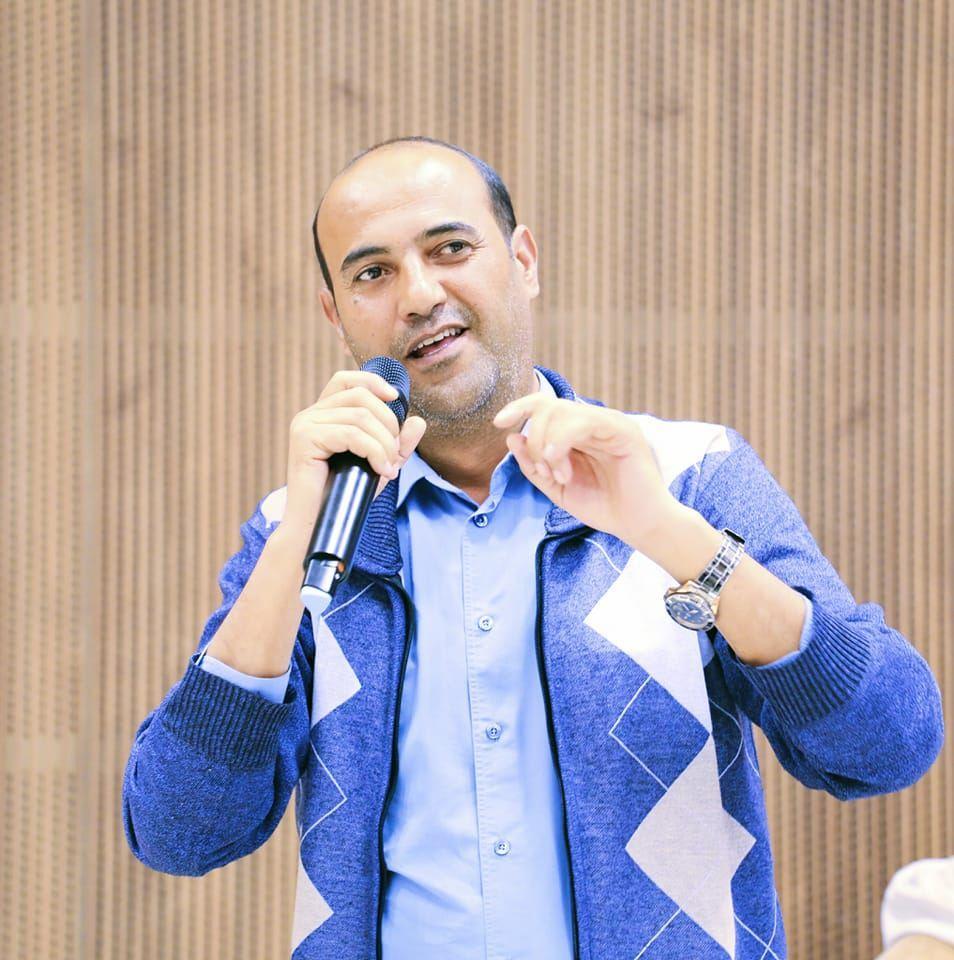
خالد التياهي – Khaled Tayahi
خالد التياهي - Khaled Tayahi
الملخص:
Summary
Khaled Tayahi, an environmental activist, has been transferred to the criminal chamber of the court of first instance in Kairouan, and was charged with ‘Offending others or disturbing their peace through public telecommunications networks” within Article 86 of the Telecommunications code. On the grounds of a post he published on social media, in which he criticized the water shortage in the areas of Mezzouna right after the wall incident.
Personal Information:
Name: Khaled Tayahi
Occupation: environmental activist
Nationality: Tunisian
Region: Kairouan
Case: ‘Offending others or disturbing their peace through public telecommunications networks” within Article 86 of the Telecommunications code.
Violation Incidents:
On April 19,2025, Khaled Tayahi an environmental activist, published a post criticizing the water shortage in Mezzouna, as he was responding to a statement given by the brother of one of the students who lost their lives after the wall incident, that declared that there was no water available to wash the bodies of the deceased.
He was summoned by the judicial police unit of the area of Haffouz in Kairouan without notifying him of the charge he was summoned for. And after appearing before the public prosecutor, it became clear that the case had been brought against him in connection with the mentioned post.
And during the interrogation, the victim of the violation was surprised to find that it focused on the content of the post ,including his solidarity with political detainee Ghazi Chaouachi and his comments on the water shortage in Mezzouna.
Although he stressed on the fact that what he has shared was a statement by the brother of one of the deceased, that’s recorded on video and widely circulated on social media, he was referred to the Summary Judgments Unit at the Court of First Instance in Kairouan on Sunday, May 17, 2025.
Upon his arrival on Monday,May 18, he was informed that his case had been transferred to the criminal chamber of the court of first instance in Kairouan, on charges of “offending others or disturbing their peace through public telecommunications networks,” under Article 86 of the Telecommunications Code, which stipulates: “Anyone who deliberately offends others or disturbs their peace through public telecommunications networks shall be punished with imprisonment for a period between one and two years and a fine ranging from one hundred to one thousand dinars.” The hearing was scheduled for June 17, 2025 however, the victim's lawyer requested a postponement of the session.
Human Rights violations:
The prosecution and legal pursuit of activist Khaled Tayahi under Article 86 of the Telecommunications Code over a social media post constitutes a blatant violation of his right to freedom of opinion and expression.
The International Covenant on Civil and Political Rights (ICCPR) enshrines the right to freedom of opinion and expression,as Article 19 of the Covenant states:
Everyone shall have the right to hold opinions without interference... Everyone shall have the right to freedom of expression; this right shall include freedom to seek, receive and impart information and ideas of all kinds, regardless of frontiers, either orally, in writing or in print, in the form of art, or through any other media of his choice."
This right is also guaranteed by Article 9 of the African Charter on Human and Peoples’ Rights, which states in its second paragraph: "Every individual shall have the right to express and disseminate his opinions within the law."
Moreover, the 2022 Constitution, as one of the foundations of Tunisia’s democratic system, guarantees this freedom in Article 37, which states: "Freedom of opinion, thought, expression, media, and publication shall be guaranteed. Prior censorship of these freedoms shall not be permitted."
The use of Article 86 of the Telecommunications Code represents a vague and overly broad legal provision, as it fails to clearly define what constitutes "offense" or "disturbance." Today, it is increasingly used to target political content or social criticism, rather than to regulate harmful or unlawful communication.