
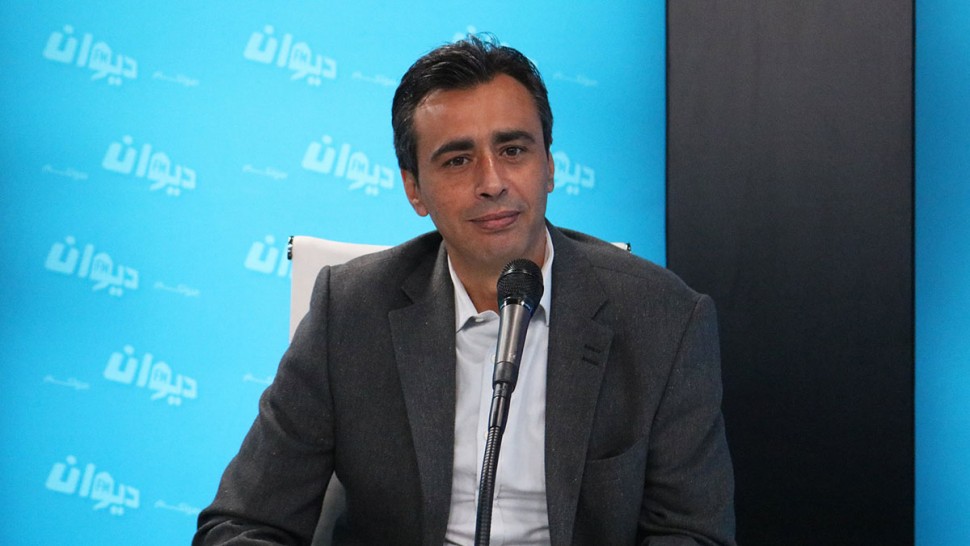
Jawhar Ben Mbarek
Summary
Jawhar Ben Mbarek, a law professor, political activist and leading figure in the National Salvation Front, was arrested on 24 February 2023 in connection with the case known in the media as the "state security conspiracy case". He was sentenced to twenty years in prison and five years of administrative supervision, a sentence upheld by the Court of Cassation on 3 September 2026. He was initially held in Mornaguia civil prison and was then transferred in December 2024 to Belli civil prison in the governorate of Nabeul. During his detention, he went on several hunger strikes in protest against what he regarded as the instrumentalization of the judiciary, judicial injustice and inadequate conditions of detention. His lawyer also reported that restrictions were imposed on his contact with other prisoners, on his receipt of books and letters, and on his use of certain common areas within the prison. In parallel with the aforementioned case, he was prosecuted over a social media post in which he criticized the 2022 legislative elections, under Article 24 of Decree-Law No. 54 of 2022 on combating offences relating to information and communication systems. The Tunis Court of First Instance sentenced him at first instance to six months in prison, a sentence reduced on appeal to five months by the Tunis Court of Appeal.
Personal information
Name: Jawhar Ben Mbarek.
Status: Law professor, political activist and leading figure in the National Salvation Front.
Age: 58 years.
Nationality: Tunisian.
Governorate: Tunis.
Charges
- Forming an association with the aim of changing the form of the State and conspiring against its internal and external security.
- Charges under Article 24 of Decree-Law No. 54.
Place of detention: Mornaguia civil prison, then Belli civil prison in the governorate of Nabeul.
Nature of the violations: Violation of freedom of opinion and expression, of fair trial guarantees, of the right to liberty and security of person, and of the right to humane treatment and respect for dignity in detention.
Events of the violation
Jawhar Ben Mbarek was arrested on the evening of 24 February 2023, together with a number of politicians, in connection with the case known in the media as the "state security conspiracy case". According to the information received, the arrest was carried out by a group of police officers from the First National Unit for the Investigation of Terrorist Crimes, Organized Crime and Crimes Affecting the Integrity of the National Territory, together with the Judicial Police Directorate, following a judicial order issued by the Public Prosecution. On 25 February 2023, after questioning him, the investigating judge at the Counter-Terrorism Judicial Pole issued a committal order (detention warrant) against him on charges relating to forming an association with the aim of changing the form of the State and conspiring against its internal and external security. The case involved nine politicians, two of whom were released, while the others remained in detention and were later referred for trial.
Ben Mbarek was held in Mornaguia civil prison. His defence team filed a request for his release, which the Indictment Chamber rejected, returning the case file to the investigating judge, who decided to extend his detention for an additional four months. The defence team filed two further requests for release, which were rejected on 28 July and 21 September 2023.
On 26 September 2023, Ben Mbarek began a hunger strike in protest against what he described as the "judicial injustice" that he considered the investigating judge of Office 36 at the Counter-Terrorism Judicial Pole to be inflicting on him, as well as against what he regarded as deteriorating conditions of detention in the prison. During the strike, his health deteriorated on 9 October 2023, requiring his transfer to hospital without his family members or his lawyer being informed. The strike lasted sixteen days before he suspended it on 12 October 2023.
In her statement to the association Intersection for Rights and Freedoms, his lawyer explained that the decision to go on hunger strike was taken in protest against what Ben Mbarek regarded as the instrumentalization of the judiciary and ill-treatment in prison. She added that he was prohibited from mixing with other prisoners on the grounds that he had been labelled a "terrorist", and that he was prevented from receiving the books sent to him by his family, in particular books of a political nature, which were subject to prior censorship by the prison administration. She also pointed out that the letters he received and sent were subject to monitoring, and that he was barred from using the prison library, the sports hall and certain common areas, which, according to her statement, resulted in his isolation from his surroundings.
In parallel with the aforementioned case, Ben Mbarek was referred for trial under Article 24 of Decree-Law No. 54 of 2022 over a post he published on social media in which he criticized the 2022 legislative elections and described them as a "farce".
On 13 February 2024, Ben Mbarek began a second hunger strike, which lasted fifteen days before he suspended it on 27 February 2024. According to his lawyer, he was not brought to the courtroom on 24 February 2024, and the Tunis Court of First Instance handed down a first-instance judgment sentencing him to six months in prison, even though the hearing had been adjourned to consider a request for postponement, and without the defence team being allowed to plead.
On 12 April 2024, the investigating judge closed the investigation in the state security conspiracy case and refused to release Ben Mbarek, according to the information received. The defence team considered that the period of pre-trial detention had exceeded the legal limit, which led it to turn to United Nations mechanisms to lodge complaints regarding the situation of the political detainees, including Ben Mbarek.
On 23 April 2024, Ben Mbarek began a third hunger strike, which lasted twenty-two days before he ended it on 15 May 2024.
On 27 May 2024, the Misdemeanour Chamber of the Tunis Court of Appeal upheld the judgment handed down in the case concerning the post, while reducing the sentence to five months in prison. According to the documentation, his lawyer stated that the appeal judgment was likewise handed down without the defence team being allowed to plead.
In July 2024, the investigating judge issued a decision banning media coverage of the state security conspiracy case, which the defence team rejected.
In December 2024, Ben Mbarek was transferred from Mornaguia civil prison to Belli civil prison in the governorate of Nabeul. According to his lawyer, his conditions of detention did not change after the transfer, as he continued to be prevented from receiving books and from mixing with other prisoners.
On 29 March 2025, Ben Mbarek began a hunger strike in protest against the decision to hold the hearings in the state security conspiracy case remotely, without bringing him to the courtroom. He had refused to take part in the hearing in this format, which led to its postponement to 11 April 2025. According to the documentation, the judicial authorities insisted on holding the hearing remotely. After ten days of the hunger strike, his lawyer reported that his health had deteriorated.
On 11 April 2025, the Criminal Chamber specialized in terrorism cases decided to adjourn the case to the hearing of 18 April 2025. According to the information received, Ben Mbarek was sentenced to eighteen years in prison. Following the verdict, he sent a letter, published by the defence team and his family on 21 April 2025, in which he expressed his rejection of the sentences handed down against him and the other detainees in the case, considering that they were victims of injustice.
On 28 November 2025, the Criminal Chamber specialized in terrorism cases at the Tunis Court of Appeal sentenced Ben Mbarek to twenty years in prison and five years of administrative supervision, according to the information received.
On 3 September 2026, the Court of Cassation upheld the judgment handed down by the Criminal Chamber specialized in terrorism cases at the Tunis Court of Appeal.
Human rights violations
The prosecution of Jawhar Ben Mbarek over a post in which he criticized the 2022 legislative elections raises serious concerns regarding respect for freedom of opinion and expression, given that the content of the post related to a political assessment of an electoral process and to a matter of public interest. Article 37 of the 2022 Constitution of the Republic of Tunisia guarantees freedom of opinion, thought, expression, information and publication, and prohibits prior censorship of these freedoms. Article 19 of the International Covenant on Civil and Political Rights likewise guarantees the right to hold and express opinions, including the discussion of public affairs and criticism of policies and authorities. In this context, the criminal prosecution of a person and his sentencing to prison on account of political expression require an examination of whether the restrictions imposed comply with the requirements of necessity and proportionality set out in international standards, particularly since political criticism and opinions concerning elections enjoy fundamental protection under freedom of expression. The information relating to the state security conspiracy case, given Ben Mbarek's political standing and his membership of the National Salvation Front, raises concerns regarding the need to distinguish between criminal prosecution based on specific acts and verifiable evidence, on the one hand, and any restriction that may affect participation in political life or the exercise of opposition, on the other. Articles 21 and 22 of the International Covenant on Civil and Political Rights guarantee the right of peaceful assembly and freedom of association, and Article 25 guarantees the right to take part in the conduct of public affairs. Political affiliation or the exercise of opposition is not, in and of itself, sufficient to justify restricting these rights.
The information provided by Ben Mbarek's lawyer regarding his conditions of detention raises concerns about respect for his right to humane treatment and respect for his dignity, in particular with regard to his being prevented from mixing with other prisoners, from receiving books and letters, and from using the prison library, the sports hall and certain common areas, as well as the monitoring of his correspondence and his transfer to hospital during his hunger strike without his family or lawyer being informed. If these practices are proven and continue to be applied without a legitimate and proportionate legal justification, they may infringe his fundamental rights and his connection with his social and cultural environment. Article 36 of the 2022 Constitution of the Republic of Tunisia guarantees every prisoner the right to humane treatment that preserves his dignity, while the Basic Principles for the Treatment of Prisoners, adopted by United Nations General Assembly resolution 45/111 of 14 December 1990, affirm the need to respect the human dignity of prisoners and not to discriminate between them, including on the basis of their political opinions. The United Nations Standard Minimum Rules for the Treatment of Prisoners also require that prisoners' rights to communicate with the outside world, to access information and to take part in cultural and educational activities be respected, subject to legitimate legal limits.
The information relating to the trial proceedings, in particular the lawyer's statement that Ben Mbarek was not brought to the courtroom in the case concerning the post and that the defence team was not allowed to plead, raises serious concerns regarding respect for fair trial guarantees and the rights of the defence. Article 33 of the 2022 Constitution of the Republic of Tunisia enshrines the presumption of innocence and the right of the accused to a fair trial affording all guarantees of defence during the stages of prosecution and trial, while Article 14 of the International Covenant on Civil and Political Rights guarantees equality before the courts and the right to a fair trial, including the right to defend oneself in person or through a lawyer. The hearings in the state security conspiracy case, which it was decided to hold remotely despite Ben Mbarek's objection to this format, also raise the question of whether effective participation in the judicial proceedings and effective communication with the defence team were ensured. Assessing this aspect requires verifying the conditions under which the hearings were held, the reasons for resorting to remote trial, and the practical guarantees available for following the proceedings, discussing the evidence and presenting a defence. Pending access to the relevant judgments, hearing records and judicial decisions, these facts remain a basis for raising human rights concerns that require verification, and do not dispense with an examination of the full judicial case file.
The information relating to the length of pre-trial detention and the rejection of requests for release also raises concerns regarding respect for the right to liberty and security of person and the guarantees against arbitrary detention. Article 35 of the 2022 Constitution of the Republic of Tunisia provides that no person may be arrested or held in custody except when caught in the act or pursuant to a judicial decision, and that the person must be immediately informed of his rights and of the charge against him and be allowed to appoint a lawyer, in accordance with the conditions laid down by law. Article 9 of the International Covenant on Civil and Political Rights likewise protects the right to liberty and security of person, prohibits arbitrary arrest or detention, and requires that deprivation of liberty be subject to legal procedures and effective safeguards. Assessing the extent to which these guarantees were respected requires examining the legal basis for the continuation of pre-trial detention, its length and the judicial decisions relating to it, as well as the extent to which an effective review of its lawfulness was available. Given the multiplicity of cases and judicial proceedings concerning Ben Mbarek, a human rights assessment requires that each case be considered separately, while taking into account the cumulative impact of the reported proceedings, judgments and restrictions on the exercise of his fundamental rights.