
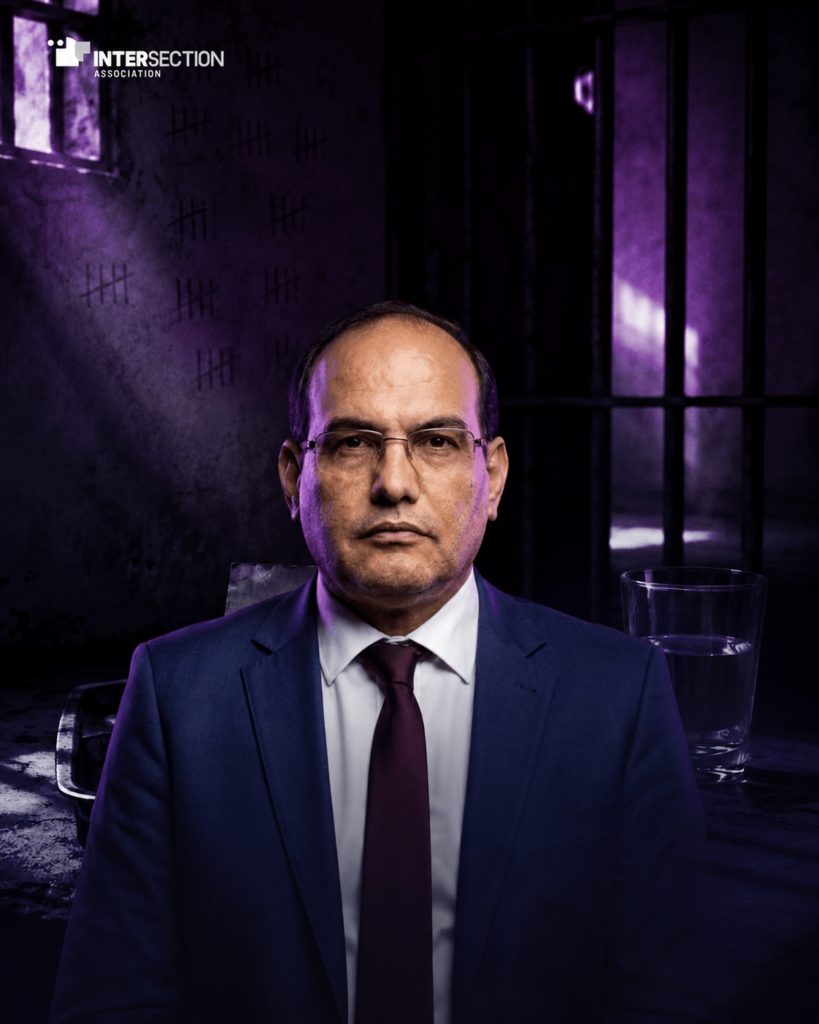
Intersection Association for Rights and Freedoms is following with grave concern the situation of lawyer Chawki Tabib, former President of the Tunisian National Bar Association and former President of the National Anti-Corruption Authority, who has begun a hunger strike at the Civil Prison of Belli in Nabeul. According to his family, he is protesting restrictions on access to his defense team, the denial of correspondence and books, the withholding of certain medication and medical supplies prescribed by his specialist, and irregularities surrounding his detention.
His family reports that no more than two lawyers are permitted to visit him each day, while only one lawyer is issued a visitation permit, valid solely on the day of issuance. These restrictions limit other members of his defense team’s ability to communicate with him and coordinate his legal defense. Tabib is also protesting restrictions on correspondence from his family, friends, and colleagues and the denial of access to books. These restrictions are particularly significant as he is currently preparing a doctoral dissertation and has been prevented from meeting with his academic supervisor in prison. His family further reports that he has not been provided with pain medication for his back condition or certain medical supplies prescribed by his specialist. He also challenges the circumstances of his detention, particularly the issuance of a detention warrant without his being heard and without his lawyer being allowed to present a defense on his behalf.
The hunger strike comes amid ongoing judicial proceedings against Tabib. He was detained on 14 April 2026 and, on 21 May 2026, was sentenced to ten years in prison, including seven years for forgery and three years for possession and use of a forged document.
The proceedings against him form part of a longer history of measures affecting his liberty, freedom of movement, and procedural rights. Since 2020, Intersection Association has documented a series of such measures, including his placement under house arrest in 2021 and a travel ban imposed in 2024, despite his stating that he had received no formal summons in relation to the matter.
Tabib’s situation requires urgent attention given his hunger strike and existing health conditions. He has chronic illnesses, including diabetes and arthritis, and previously lost consciousness in prison, requiring his transfer to a hospital in Nabeul. Combined with his family’s report that he has been denied some of his prescribed medication and medical supplies, these circumstances raise serious concerns for his health and physical safety.
Intersection Association considers that the restrictions on Tabib’s access to his lawyers undermine the right to defense guaranteed under Article 33 of the 2022 Constitution of the Republic of Tunisia. They also raise concerns under Article 14 of the International Covenant on Civil and Political Rights, which guarantees adequate time and facilities to prepare a defense and communicate with counsel, as well as under the UN Basic Principles on the Role of Lawyers. Restrictions on his access to correspondence and books also raise concerns under Rules 58 and 61 of the Nelson Mandela Rules regarding prisoners’ communication with family and friends and access to reading materials, as well as constitutional guarantees protecting privacy and the confidentiality of correspondence.
The reported denial of prescribed medication and medical supplies further raises concerns regarding his right to health, guaranteed under Article 43 of the Constitution, as well as compliance with the standards on healthcare for prisoners set out in Rules 24 and 27 of the Nelson Mandela Rules. The circumstances surrounding the issuance of the detention warrant also raise concerns regarding his right to defense and fair trial guarantees, particularly as the warrant was reportedly issued without hearing him or allowing his lawyer to present his defense. This may undermine his effective participation in the proceedings and his right to legal assistance, contrary to the guarantees enshrined in Article 33 of the Constitution and Article 14 of the International Covenant on Civil and Political Rights.
Intersection Association for Rights and Freedoms therefore calls on the relevant authorities to intervene urgently to safeguard Chawki Tabib’s health and physical safety and to provide him without delay with the medication, medical supplies, and healthcare prescribed and required for his condition. The authorities must also ensure that he is not subjected to pressure or coercion because of his hunger strike and that his dignity and safety are respected throughout any medical care he receives.
Intersection Association further calls for the restrictions on visits by his defense team to be lifted and for his lawyers to carry out their duties without arbitrary restrictions. It also calls for his right to communicate with his family, friends, and colleagues to be respected; for him to receive correspondence and books addressed to him; and for arrangements allowing him to continue his academic work and communicate with his academic supervisor while in prison. Finally, Intersection Association calls for the irregularities surrounding the issuance of the detention warrant to be reviewed and for his right to defense and all fair trial guarantees to be fully respected.