
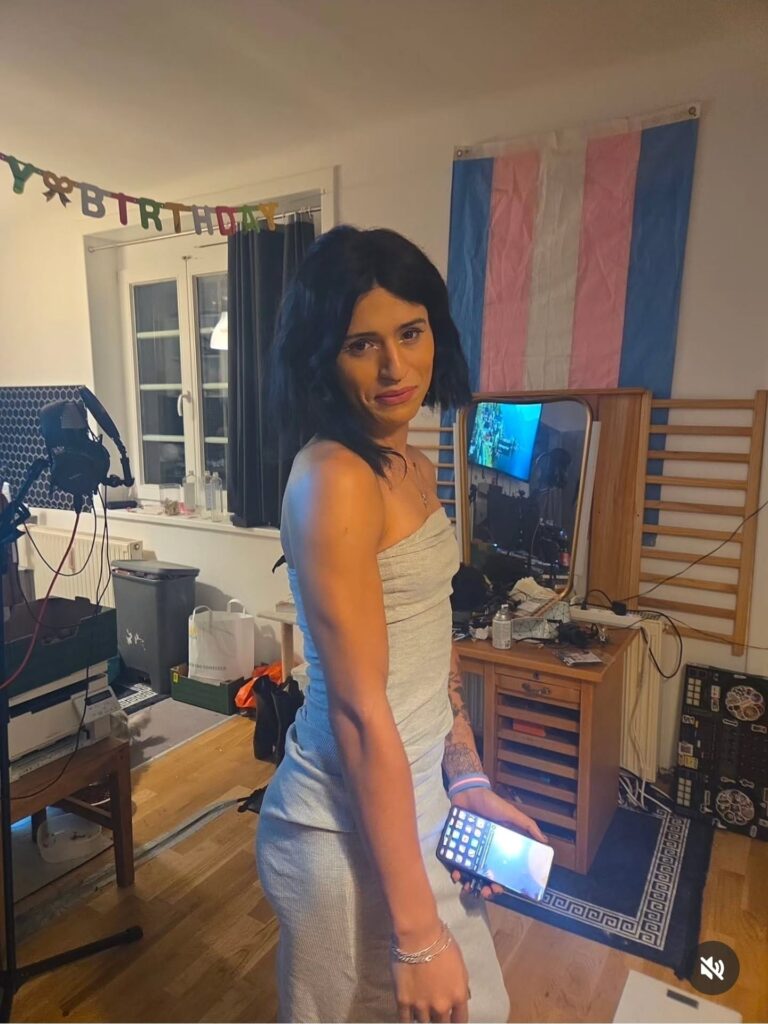
Valentina
Summary
According to her account, Valentina, a trans woman and activist for the rights of migrants and queer people, was subjected between 2017 and 2021 to a series of acts of harassment, violence and insults attributed to security officers and a citizen, in various contexts in the city of Jendouba and the delegation of Souk Essebt. Her account states that on multiple occasions she was subjected to insults, humiliation and physical violence, detention and stops, and threats because of posts on Facebook and her appearance, in addition to interference with her phone and the deletion of a video recording, and, in one incident, being prevented from filing a complaint. She further reports that during her arrest in January 2021 she was subjected to violence and ill-treatment, and was then committed to prison in a case that ended at first instance with the charges being dismissed.
Personal Information
Name: Valentina.
Age: 27.
Nationality: Tunisian.
Governorate: Jendouba.
Status: Works in the audiovisual field and is active in an association working on the rights of migrants and queer people.
Nature of the violation: Violence and ill-treatment; harassment and humiliation; infringement of liberty and security of person; infringement of the inviolability of the home; possible restrictions on freedom of expression; and possible breaches of arrest, custody and fair treatment safeguards, with suspected discriminatory treatment linked to appearance and gender identity.
Incidents of Violation
In July 2017, Valentina reported that she was subjected to violence by security officers while filming a video at around 4 p.m. at the rural transport station in El Azima, Souk Essebt, Jendouba governorate. She stated that she was surprised by a security officer who insulted her and then, according to her account, took her to the National Guard post in Souk Essebt in a white unmarked car. She added that during this she was pushed, insulted and humiliated.
During the same period, she stated that she had set up an agricultural project selling fruit, and that security officers would frequently come by to take fruit for free. When she objected to this behaviour, she stated that she was insulted, beaten, and mocked for her appearance and her gender identity.
In May 2018, Valentina stated that she was arrested and taken to the National Guard post in Souk Essebt, Jendouba governorate, because she was wearing an earring, according to her account, where she was questioned and threatened with being referred on a terrorism-related charge because of her posts calling for reflection on religion, before being released.
On 26 October 2019, Valentina left the country for Qatar, according to her account, in search of safety and to escape the harassment she was facing. She returned to Tunisia on 9 November 2019 after being unable to adapt, and reopened a business in her neighbourhood.
In February 2020, she stated that she was attacked by a citizen because of her appearance, who came at her carrying a bladed weapon. She added that she called the police by phone, and the officer, according to her account, mocked her voice and told her she had to go to the National Guard post in Souk Essebt, Jendouba, to file a complaint. When she went to the post, she met the head of the post to file her complaint, but he refused to register it and told her, according to her account, that he was "the master of the law", then slapped her, causing her to fall down the stairs.
As soon as she left the security post, Valentina filmed a video recounting the assault she said she had suffered at the hands of the head of the National Guard post. She also called the National Guard emergency number, but she stated that they refused to talk to her because of her psychological state, as she was in a state of breakdown. Afterwards, two officers handcuffed her, took her back inside the post and into one of its rooms, where she stated that she was subjected to violence and insults. During this, one of the officers, according to her account, seized her phone and deleted the video she had recorded.
She added that she was then taken to the emergency department of the Jendouba Regional Hospital after the officers called an ambulance, that the ambulance staff shouted at her, and that she did not receive treatment from the medical staff at the hospital, forcing her to call her parents to take her home.
On 20 January 2021, in the context of protests demanding employment in Jendouba, Valentina stated that a security officer burst into her home and took her by force into a police vehicle, where, according to her account, she was verbally abused, before being taken to the National Guard judicial police post in Jendouba.
She stated that she was taken alone into one of the rooms of the judicial police post after she introduced herself as a human rights activist and said she would contact the Tunisian League for the Defence of Human Rights. There, she stated, a group of officers beat her and mocked her, and she lost consciousness as a result of the violence she suffered. She added that the officers tried to revive her and secretly film her, according to her account, in order to obtain a recording containing an admission from her that she had not been subjected to violence.
As her health deteriorated, she was taken to the Jendouba Regional Hospital by officers from the National Guard post. She stated that she requested a medical certificate, but the doctor refused, according to her account, to give her one because of the presence of the officers.
Afterwards, she was returned to the National Guard judicial police headquarters in Jendouba, where she was questioned, according to her account, about the way she dresses and her posts on the social media site "Facebook". She also stated that she was forced to put her fingerprint on her statement while being insulted and sworn at by one of the officers.
She was then taken to a solitary cell at the Jendouba Court of First Instance, in conditions she described as not meeting health standards. She was then issued with a committal warrant to the Sers civil prison on 22 January 2021, on charges relating to damaging the property of others, premeditated obstruction of freedom of movement on the public highway, and causing disorder and disturbance.
Valentina stated that she did not appear before the first-instance judge or the Public Prosecutor, as she affirmed, before being committed to prison. Inside the prison, she stated that the officers sprayed her with cold water and beat her. Following this, her family, according to her account, gathered a number of testimonies proving that she had not taken part in the events.
Valentina was granted provisional release on 27 January 2021.
In her case No. 21/167, the Jendouba Court of First Instance, with her at liberty, issued a judgment on 24 February 2021 dismissing the charges. A judgment on appeal was also issued in case No. 21/357 by the Misdemeanour Chamber of the Jendouba Court of Appeal on 6 January 2022.
Human Rights Violations
The facts in Valentina's account, if established, raise serious suspicions of infringements of her rights to dignity, physical integrity and protection from torture and ill-treatment, equality and non-discrimination, liberty and security of person, the inviolability of the home and private life, freedom of opinion and expression, and the right to health, as well as the safeguards relating to arrest, custody, fair trial and humane treatment during deprivation of liberty. These events occurred while the 2014 Constitution of the Tunisian Republic was in force.
The facts relating to violence, beating, pushing, slapping, insults, humiliation and degrading conduct attributed to security officers raise suspicions of infringements of dignity, physical integrity and protection from torture and ill-treatment, rights enshrined in Article 23 of the 2014 Constitution, which protects human dignity and physical integrity and prohibits psychological and physical torture. The International Covenant on Civil and Political Rights also enshrines, in its Article 7, protection from torture or cruel, inhuman or degrading treatment or punishment. These guarantees are of particular importance with regard to the events she reported as having occurred in detention or inside prison, where the state remains obliged to ensure that persons deprived of their liberty are treated humanely and with respect for their dignity.
The facts relating to the repeated mockery of Valentina's appearance and ridicule of her gender identity, according to her account, also raise suspicions of discriminatory treatment on the basis of appearance or gender identity, particularly if it is established that these elements were a cause of or a factor in the violence, insults or security interventions she was subjected to. Article 21 of the 2014 Constitution enshrines the principle of equality before the law and non-discrimination, and the International Covenant on Civil and Political Rights prohibits discrimination and guarantees the protection of the rights recognised therein without discrimination. Upon verification, this suspicion requires examining whether Valentina's gender identity or appearance influenced the conduct of the officers, her treatment or the measures taken against her.
The facts relating to Valentina being questioned and threatened, according to her account, with referral on a terrorism-related charge because of her posts, and later being questioned about her posts on "Facebook", relate to freedom of opinion, thought and expression guaranteed by Article 31 of the 2014 Constitution, as well as Article 19 of the International Covenant on Civil and Political Rights. Threats or questioning cannot in themselves be considered sufficient evidence that a violation occurred; however, any restriction on the exercise of freedom of expression must have a legal basis and meet the requirements of legality, necessity and proportionality, and the nature of the posts concerned and the actual legal basis of the measures taken in respect of them must be verified.
As for Valentina's account of the refusal to register her complaint after she was attacked by a citizen, this raises an issue concerning her access to protection and redress mechanisms, particularly if it is established that the refusal was linked to her appearance, gender identity or psychological state, or that it prevented her from obtaining the available legal protection. Failing to deal seriously with her allegation of an attack with a bladed weapon may also raise, depending on the circumstances of the incident and the measures taken by the authorities, issues relating to the state's duty to provide effective protection to individuals and guarantee remedies.
The entry of a security officer into Valentina's home and her removal from it on 20 January 2021 raise suspicions of an infringement of the inviolability of the home and private life, if it is established that the entry took place without a legal basis or without respecting the applicable procedures and safeguards. Article 24 of the 2014 Constitution protects private life, the inviolability of the home and the confidentiality of correspondence, communications and personal data, and the International Covenant on Civil and Political Rights protects private life and the home from arbitrary or unlawful interference in its Article 17. A final assessment of this incident requires verification of the basis for entering the home, the authority that issued the decision, and the circumstances in which she was taken away.
The seizure of Valentina's phone and the deletion of the video that she said documented the assault on her also raise issues relating to the protection of private life, data and communications, as well as the possible impact on her ability to document the violence she alleges she suffered, constituting unlawful interference with her private life or her data, in addition to its possible effect on the preservation of evidence relating to the allegation of ill-treatment.
As regards Valentina's arrest, custody and committal to prison in January 2021, Article 29 of the 2014 Constitution guaranteed that no person may be arrested or detained except in cases of flagrante delicto or by judicial decision, and that they must be informed immediately of their rights and of the charge against them and be allowed to have a lawyer, with the duration of arrest or detention set by law. Article 27 guarantees the presumption of innocence, a fair trial and the guarantees of the defence. Law No. 5 of 2016 amending the Code of Criminal Procedure also strengthened the rights of persons held in police custody, including the possibility of requesting the appointment of a lawyer and the lawyer's presence during questioning and confrontation, while regulating the exceptions relating to terrorism cases and the need for the investigation to take place within set time limits.
Her account of being forced to put her fingerprint on her statement while being insulted and sworn at, as well as her account of not appearing before a judge or the Public Prosecutor before her committal, raise additional issues relating to the guarantees of the defence and the integrity of questioning and investigation procedures. This requires verification of the questioning records, whether she was informed of her rights and allowed to have a lawyer, whether she made any requests or objections regarding the conditions of questioning, and what was officially recorded in the records.
As regards the conditions of her detention, and her account of being taken to a solitary cell at the Jendouba Court of First Instance in conditions not meeting health standards, and then being beaten and sprayed with cold water inside the Sers civil prison, these raise suspicions of an infringement of her right to humane treatment during deprivation of liberty, a right enshrined in Article 30 of the 2014 Constitution, as well as Article 10 of the International Covenant on Civil and Political Rights, which requires that all persons deprived of their liberty be treated humanely and with respect for their dignity. The United Nations Standard Minimum Rules for the Treatment of Prisoners also require conditions of detention that respect human dignity and prohibit torture and other cruel, inhuman or degrading treatment.
The facts relating to Valentina not receiving treatment, according to her account, at the Jendouba Regional Hospital, and the refusal to give her a medical certificate after she was subjected to violence, also raise issues relating to the right to health and the ability to document the alleged injuries. Article 38 of the 2014 Constitution guaranteed the right to health and obliged the state to guarantee prevention and health care and to provide the means necessary for the safety and quality of health services. Failing to document injuries or to allow a person access to an appropriate medical examination can in practice affect their ability to substantiate allegations of violence and ill-treatment.
Based on the available information, the case rests on Valentina's account of a series of acts attributed to security officers, some relating to violence and ill-treatment, others to possible restrictions on freedom of expression and personal liberty, to the inviolability of the home and private life, and to suspected discriminatory treatment on the basis of appearance and gender identity, as well as issues relating to access to health care, medical documentation and criminal procedure safeguards.