
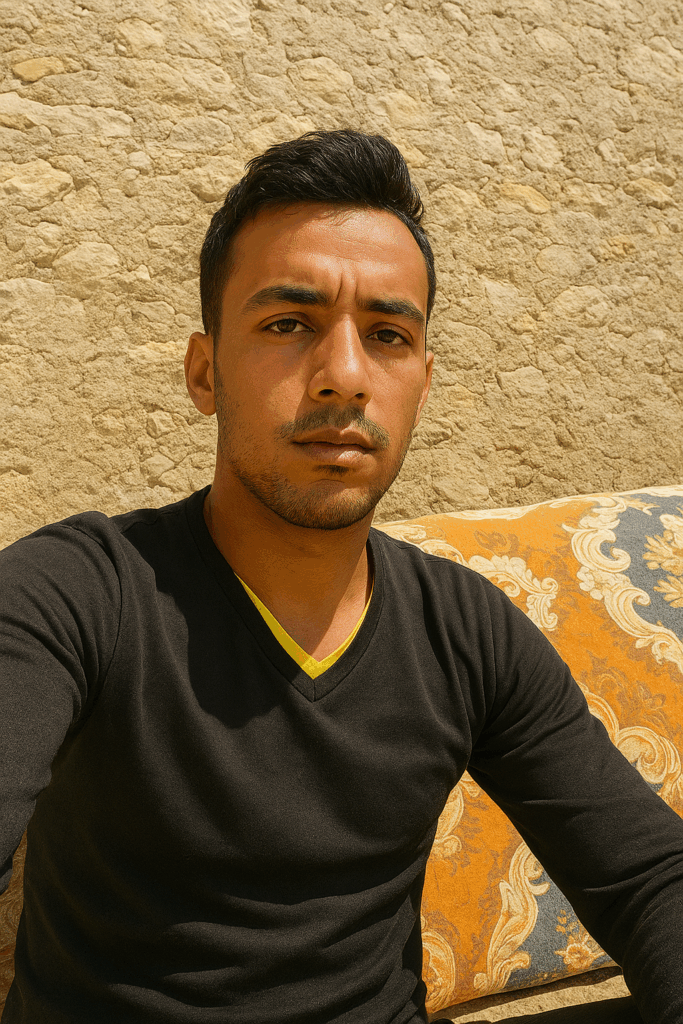
Akrem Jamaoui
أكرم الجمعاوي - Akrem Jamaoui
Akrem Jamaoui, a 25 year old man from the governorate of el kef, was instantaneously arrested on june 1, 2024, while returning home after watching a football match.
He was later transferred to mornaguia prison, where he was reportedly subjected to violence. Shortly after, his family was informed of his death under unclear and deeply suspicious circumstances, with no explanation provided.
Summary
Name : Akrem jamaoui
Age : 25
Nationality : Tunisian
Circumstances and violations
On June 1, 2024, Akrem jamaoui attended a football match at the rades stadium between club africain and esperance sportive de tunis. Following clashes that erupted outside the venue, akrem was arrested right by the stadium gates.
He was taken to the sidi El bechir police station without informing his family, held in custody, and later transferred to the bouchoucha detention center. 3 days after his arrest, a detention order was issued against him, and he was transformed to mornaguia civil Prison.
Akrem’s family stated that during the entire period following his arrest, they received any official information about his whereabouts or his health condition, despite their repeated attempts to inquire and locate him. They added that the Sidi El Béchir police initially denied any knowledge of Akrem or his detention.
Overwhelmed with worry, the family turned to social media, posting a public appeal on facebook in hopes of finding any clue about their son. Shortly after, one of the people who was detained during the same period that Akrem was in the bouchoucha detention center, confirming that he had seen him there.
When the family went to the center themselves, they were informed that Akrem had been transferred to Mornaguia Civil Prison. A few days later, the family learned that Akrem had been convicted and sentenced to one year in prison.
During his trial, Akrem was present, and the family reported that he appeared unwell. He told the judge that he had been subjected to beatings, mentioning that he felt sick and that his health was deteriorating. His father added that during a visit, Akrem confided that he had been beaten and mistreated in prison, saying to him : Dad, they’re going to kill me...”
Two weeks into his imprisonment, on June 17, Akrem Jamaoui passed away at mornaguia prison around 12h. He was then transferred to charles nicolle hospital in tunis, and the family was informed of his death that evening.
The family recounted that they were told the cause of death was respiratory distress and cardiac arrest. However, they denied that Akrem had any chronic illnesses, emphasizing that he had entered prison in good health and that his condition had worsened due to the prison conditions.
After a forensic examination, the report concluded that his death resulted from severe physical assault with a hard object, causing a complete fracture of the rib cage and internal bleeding.
Since Akrem’s death, his family has contacted various authorities and institutions seeking intervention and justice, stressing that their son died under mysterious circumstances and was a victim of violence. They hoped to see his rights upheld and the perpetrators held accountable. Although an official investigation was opened, no concrete actions have been taken so far.
Human rights violations
Akrem jemaoui’s case involves multiple serious human rights violations affecting his dignity, right to life, bodily integrity, and the guarantees of a fair trial.
He was detained without his family being informed or being allowed access to a lawyer, which constitutes a clear breach of the right of any individual to know the reasons for their detention and to notify their relatives of their whereabouts. This action violates Law No. 5 of 2016, which guarantees every detainee the right to be informed of the reasons for their arrest, to notify their family, and to have access to legal counsel.
It also breaches Article 9 of the International covenant on civil and political rights, which prohibits arbitrary detention and requires informing detainees of the reasons for their arrest, as well as article 6 of the universal declaration of human rights, which affirms the right of every person to recognition as a legal entity.
In this context, Akrem should have been able to fully exercise his legal rights, and what occurred can be considered a case of arbitrary detention and temporary enforced disappearance.
Moreover, Akrem was subjected to physical assault and ill-treatment while in prison, as later confirmed by the forensic report, which established that his death resulted from severe violence with a hard object, causing a complete fracture of the rib cage and internal bleeding.
These facts constitute a blatant violation of article 25 of the constitution, which states that “the state protects human dignity and the integrity of the body, prohibits both physical and psychological torture, and the crime of torture does not lapse with time”. In addition, Law No. 43 of 2013 on the Prevention of Torture bill obliges the state to immediately investigate any allegations of torture. What Akrem endured also breaches Article 5 of the universal declaration of human rights and Article 7 of the International covenant on civil and political rights, both of which prohibit torture and cruel, inhuman, or degrading treatment, and represents a clear violation of the provisions of convention Against Torture and Other Cruel, Inhuman or degrading treatment or punishment.
Akrem’s death in the Mornaguia civil prison as a result of violent assault constitutes a violation of the right to life and bodily integrity rights that are fundamental and protected under Article 24 of the constitution, which states that “the right to life is sacred and may only be restricted in extreme cases defined by law”.
This is also enshrined in Article 3 of the universal declaration of human rights, which guarantees that “everyone has the right to life, liberty, and security of person,” and Article 6 of the international covenant on civil and political rights, which obliges states to protect the right to life and prohibits arbitrary deprivation of life.
Furthermore, the United nations standard minimum rules for the treatment of prisoners (the Nelson Mandela rules) place full responsibility on the state for the life and safety of anyone in its custody, including individuals deprived of their liberty.
Article 10 of the international covenant on civil and political rights affirms that “all persons deprived of their liberty shall be treated humanly and with respect for their inherent dignity”.
Likewise, the Nelson Mandela Rules require prison authorities to ensure that detainees receive healthcare equivalent to that available outside prison.
Akrem’s death is not an isolated incident but part of a recurring pattern of violations and a series of deaths inside prisons.
This reality calls for a thorough and transparent investigation into suspicious deaths, genuine national accountability, and an urgent review of the prison system and related legal procedures to safeguard the rights to life, dignity, and health.