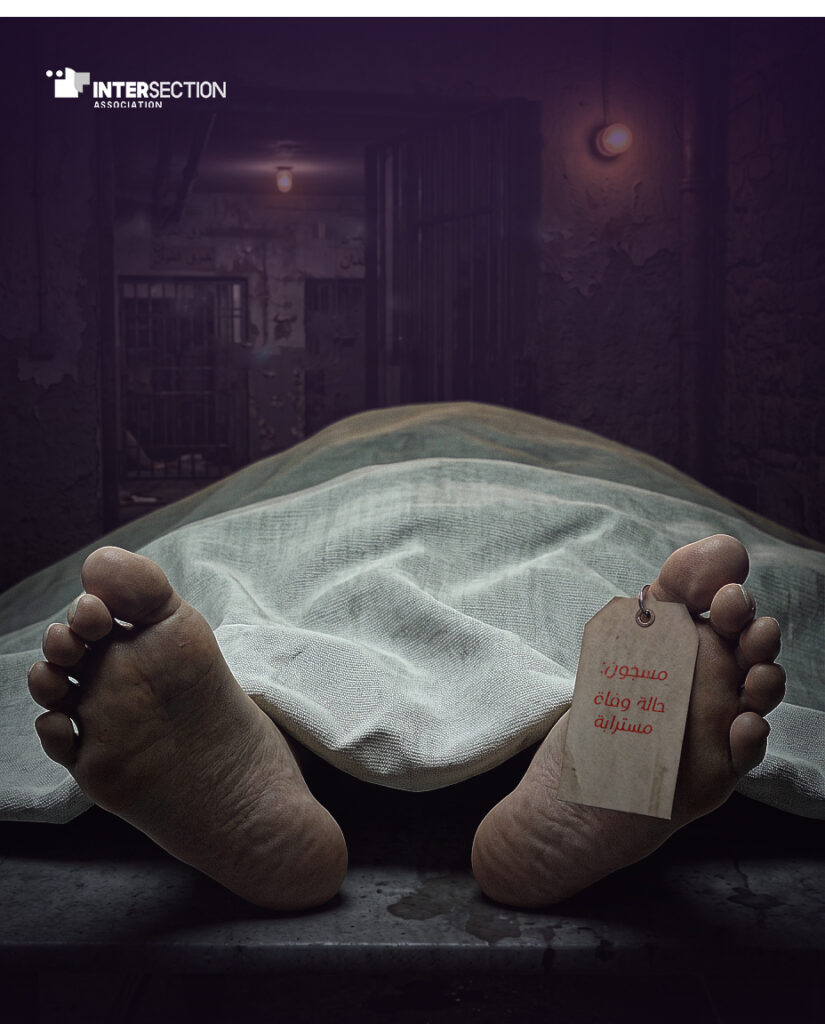
Tunisian prisons have recently witnessed a series of suspicious deaths that signal growing risks to the safety of persons deprived of their liberty. In this context, Intersection Association for Rights and Freedoms expresses its deep concern over the increasing threats to the right to life in Tunisian prisons following the documentation of four suspicious deaths during July 2026: two at Gabes Prison, one at Borj El Amri Prison, and one at M’saadine Prison. These cases bring the total number of suspicious deaths documented in Tunisian prisons since the beginning of 2026 to eight.
These deaths have occurred amid an intense heatwave, repeated power outages, persistent prison overcrowding, poor ventilation, and inadequate detention conditions and healthcare, raising serious concerns about the safety and well-being of people in detention.
Intersection Association for Rights and Freedoms stresses that persons deprived of their liberty remain under the full legal responsibility of the State, which is obliged to protect their lives, ensure their safety, and uphold their dignity. The Association further emphasizes that every death in custody must be subject to a prompt, independent, effective, and transparent investigation to establish its causes and circumstances and to ensure accountability for any negligence or responsibility, in accordance with Tunisia’s human rights obligations.
The Association calls on the Tunisian authorities to take urgent action by opening independent and transparent investigations into all recent deaths in prisons, establishing the truth surrounding each case, and ensuring accountability where negligence or wrongdoing is found. It also urges the authorities to adopt immediate measures to improve detention conditions, guarantee adequate healthcare, and protect prisoners from risks to their lives and physical integrity, in line with international standards, respect for human dignity, and the right to life.
Finally, Intersection Association for Rights and Freedoms renews its call on the Tunisian authorities to grant independent oversight bodies and human rights organizations access to prisons to monitor detention conditions and inspect the living conditions of prisoners across all detention facilities. Such access is essential to strengthening independent oversight and transparency, protecting the right to life, safeguarding human dignity, and preventing the recurrence of such incidents.