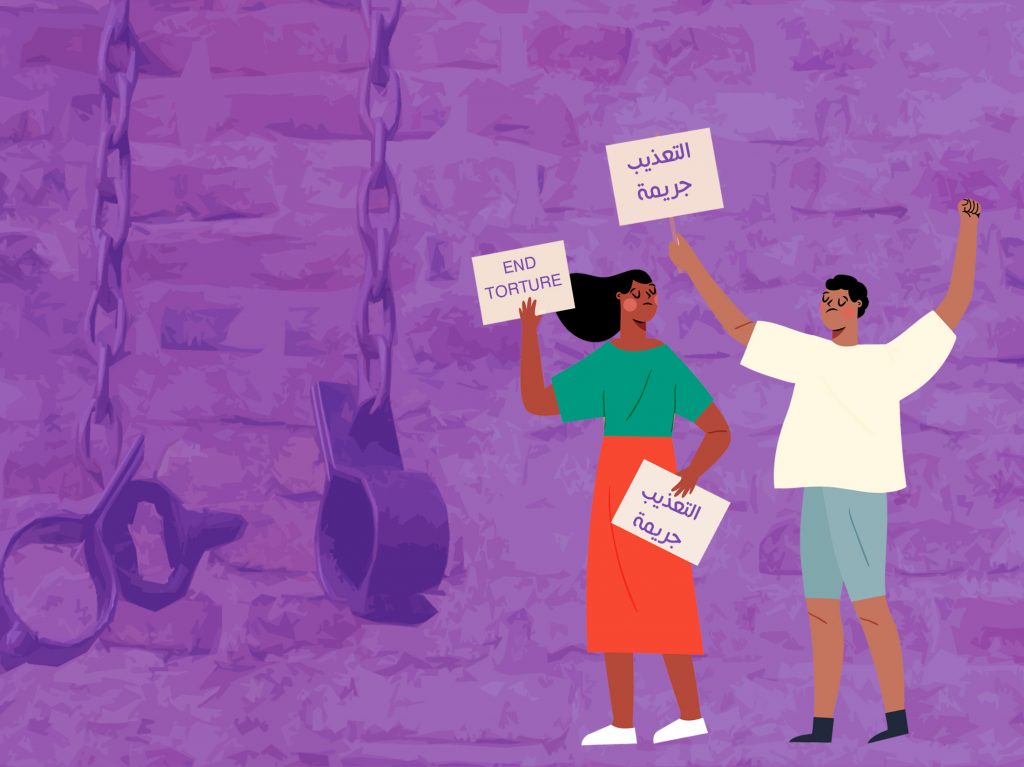
“تحمي الدولة كرامة الذات البشرية وحرمة الجسد، وتمنع التعذيب المعنوي والمادي. ولا تسقط جريمة التعذيب بالتقادم.”

الفصل 23 من الدستور التونسي.

” لكل إنسان حق في حرية التعبير. ويشمل هذا الحق حريته في التماس مختلف ضروب المعلومات والأفكار وتلقيها ونقلها إلى آخرين دونما اعتبار للحدود، سواء على شكل مكتوب أو مطبوع أو في قالب فني أو بأية وسيلة أخرى يختارها.”

المادة (19) فقرة 2 من العهد الدولي للحقوق المدنية والسياسية.

“يعامل جميع المحرومين من حريتهم معاملة إنسانية، تحترم الكرامة الأصيلة في الشخص الإنساني.”

المادة (10) فقرة 1 من العهد الدولي للحقوق المدنية والسياسية.

” لكل فرد حق في الحرية وفى الأمان على شخصه. ولا يجوز توقيف أحد أو اعتقاله تعسفا. ولا يجوز حرمان أحد من حريته إلا لأسباب ينص عليها القانون وطبقا للإجراء المقرر فيه.”

المادة (9) فقرة 1 من العهد الدولي للحقوق المدنية والسياسية.

الاقسام
الحالة
Jasser Saiid, a 22-year-old second-year university English student, has been under psychiatric care since 2020. On August 20, 2025, he was arrested at his home following a raid carried out by the counter-terrorism unit in El Aouina. His family was not informed of his whereabouts, and his lawyer was denied access during the investigation. During police custody, he was forced to sign statements without being allowed to read them, which negatively impacted his mental health. He remained in custody for 15 days before a detention order was issued, placing him in prison for three months, further worsening his condition. On January 27, 2026, a psychiatric report confirmed that he lacked criminal responsibility and required compulsory hospitalization. Accordingly, the public prosecutor at the judicial counter-terrorism pole of the Tunis Court of First Instance decided to drop the charges due to the absence of criminal liability and ordered mandatory psychiatric hospitalization. However, at the time of documentation, this decision had not been implemented, and Jasser Saïd remains detained in prison.

Dalila Ben Mbarek Msaddek, a lawyer, human rights defender, and member of the defence committee representing political detainees, is currently facing seven criminal cases under article 24 of decree-law no. 54. These proceedings arise from her acts of solidarity, legal defence, and public denunciation of violations committed against political detainees in what is publicly referred to as the “conspiracy case”. The repeated judicial proceedings brought against her, particularly in connection with the exercise of her professional duties as legal counsel and her public human rights advocacy, raise serious concerns regarding judicial harassment, restrictions on freedom of expression, and interference with the right to defence and fair trial guarantees.
Hassan Dabbashi, a Tunisian national from the governorate of Sfax, was present on 22 February 2026 when he witnessed an individual filming a damaged motorcycle after a police vehicle had allegedly collided with it. He briefly stopped, along with other bystanders, to observe the situation. At approximately 9:00 p.m. the same day, he was apprehended while sitting in a café and subjected to physical assault by officers from the Hay Bahri police station in Sfax. He was subsequently taken to the police station, where he was reportedly subjected to further ill-treatment, resulting in physical injuries. He was released at approximately 2:00 a.m. in a critical health condition. He later sought medical assistance at Habib Bourguiba University Hospital in Sfax; however, he was reportedly denied access to a forensic medical examination unless authorized by the same police station.
Ahmed Harbaoui, a 21-year-old Tunisian man, worked as a street vendor selling pineapples from a cart in the Bab Bhar area, where he also resided in Tunis. According to his family, he was in good health before his arrest, with no chronic illnesses and no regular medication.
Lotfi Issa, Chief of Security at a hotel in Hammamet, was subjected to criminal prosecution and deprivation of liberty for a period of two years under Article 24 of Decree-Law No. 54 of 2022, following his sharing of a social media post critical of the 2024 presidential elections. On 5 July 2024, his workplace was raided and he was taken to the Judicial Counter-Terrorism Unit, where he was held for nine days. His home was also searched. A first-instance judgment sentenced him to two years’ imprisonment. The judgment was upheld on appeal, with a suspension of the remaining sentence after he had served one year and three months at Borj El Amri prison. On 16 January 2026, he was summoned by his employer on grounds of unjustified absence and subsequently dismissed, despite the fact that his arrest had taken place at his workplace.
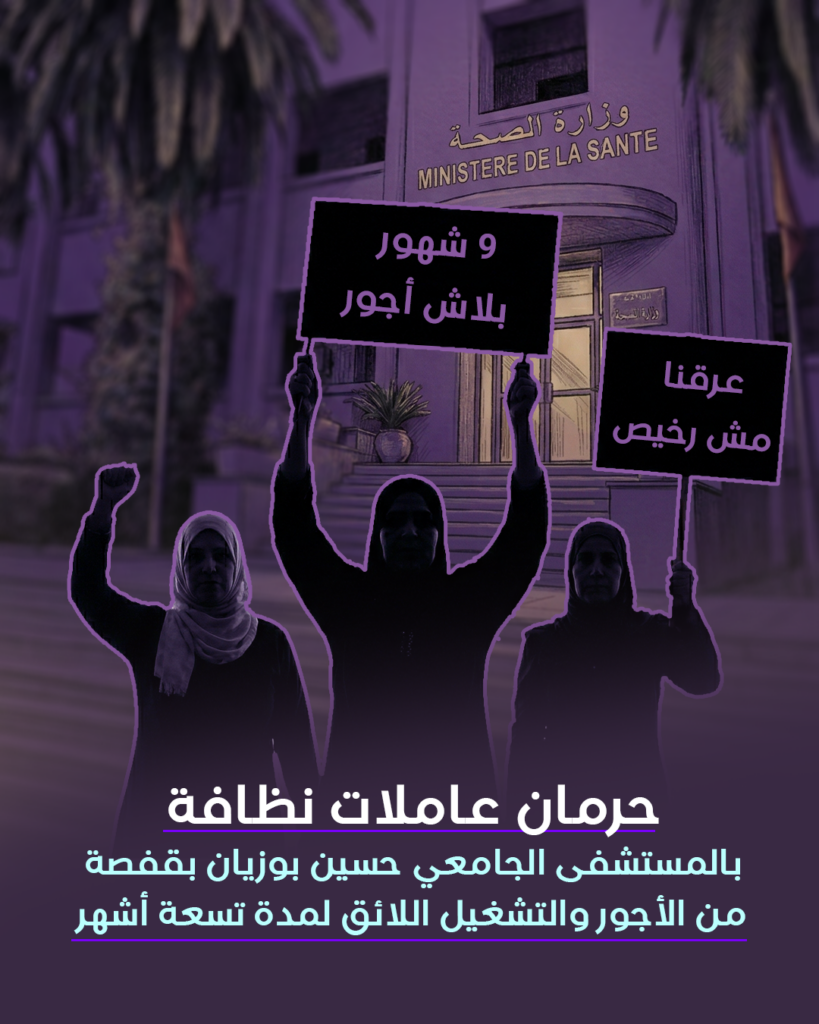
The case of female cleaning workers at Houcine Bouzaiène University Hospital in the governorate of Gafsa highlights the precarious nature of working conditions following the prohibition of subcontracting arrangements. Twenty-five women workers were deprived of their wages for nine consecutive months despite continuing to perform their work regularly.
Tarek Khoufi, a civil society activist from Oued Ellil in the governorate of Manouba, was detained in 2024 in connection with a video he published criticizing the 2023 local council elections, following an incident in which his campaign banner was torn during the electoral campaign.
Saif Zeyed, a fourth-year secondary student in the technical sciences stream, was arrested in February 2025 in connection with a criminal case. As a result, he was prevented from continuing his studies and was removed from the student registry, despite his family’s requests to allow him to pursue his education while in detention.
Oussama Farhat, a Tunisian national and primary school teacher, was subjected to criminal prosecution after posting a critical comment on the official page of his academic institution. His comment addressed the institution’s policies concerning the provision of psychological support services for students. This peaceful expression resulted in prolonged criminal proceedings under Article 86 of the Telecommunications Code, repeated security and administrative summonses, and significant professional and psychological harm. The case constitutes a clear interference with his right to freedom of opinion and expression.
Mohamed Khallouli, a Tunisian human rights defender, was sentenced to one month of imprisonment and fined 1,000 Tunisian dinars following Facebook posts published on his personal account. The posts included satirical criticism of the then Head of Government, Ahmed Hachani, the Minister of Agriculture, and the President of the Republic, as well as a post condemning police violence.

وجوه الحرية

هي منصة لرصد وتوثيق الانتهاكات التي تقوم بها المؤسسات الأمنية في تونس بحق المدافعات والمدافعين عن حقوق الإنسان، والناشطات والنشطاء، والصحفيين والصحفيات، وأفراد مجتمع الميم عين، وضحايا الانتهاكات من المواطنات والمواطنين التونسيين.

فيديوهات

عبد الرزاق لشهب

حمزة نصري

عبد السلام زيان

القائمة البريدية