
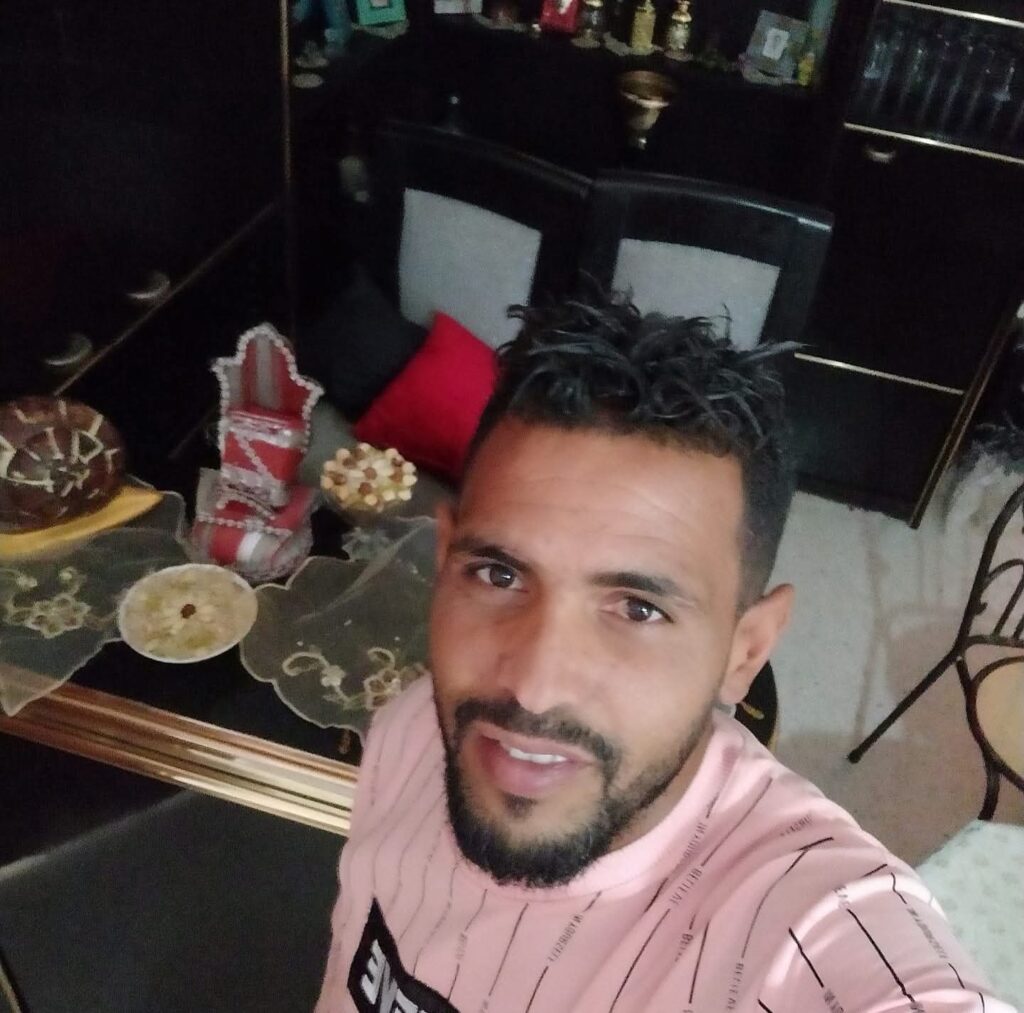
Achraf Kardous
Summary
Achraf Kardous was arrested on 16 September 2026 after going to the headquarters of the delegation of Mdhilla to request social assistance and help in providing back-to-school supplies for his children, given his difficult social and economic circumstances. He was taken to the Mdhilla police station and then to the Gafsa security district, where he stated that he was questioned without being allowed to have a lawyer and without being informed, according to his account, of his rights or the reasons for his custody. He also stated that he was denied contact with his family.
Kardous was arrested in the presence of his two children, aged 5 and 6, who he stated were left outside unattended, before a passer-by found them in a state of fear and panic. He was later released, and his file was referred to the Gafsa District Court; according to his account, the case is still ongoing.
Personal Information
Name: Achraf Kardous.
Age: 40.
Nationality: Tunisian.
Status: Citizen.
Governorate: Gafsa.
Incidents of Violation
On 16 September 2026, Achraf Kardous, a native of Mdhilla in the governorate of Gafsa and a father of three, went to the headquarters of the delegation of Mdhilla to present his social and economic circumstances and request social assistance and help to enable him to provide school supplies and back-to-school necessities for his children, according to his account and that of his sister.
According to the family, Achraf presented his requests to the Delegate of Mdhilla, who asked him to leave the delegation headquarters. After leaving, he sat in the delegation's outdoor garden, before security personnel arrested him and took him to the Mdhilla police station, then transferred him to the Gafsa security district to spend the night there.
The arrest took place in the presence of his two children, aged 5 and 6. According to his account, the two children were left outside after he was taken away, without the care of an adult, until a passer-by found them in a state of fear and panic after their father was arrested in front of them. Meanwhile, his sister reported that Achraf was still detained at the Gafsa security district, while family members were gathered in front of the delegation headquarters demanding his release.
During a call with him, Achraf explained that while at the Gafsa security district he was questioned by the deputy head of the Mdhilla police station, without a lawyer present and without being informed, according to his account, of his rights or the reason for his custody. He also stated that he asked to make a phone call to inform his family of his situation, but was not allowed to do so.
Later, Kardous appeared before the Public Prosecutor without a lawyer present. According to his lawyer, his client was arrested without the defence being able to see a written authorisation or any written record of the custody authorisation, nor was he, according to the lawyer, informed of the charge against him or of his rights enshrined in the Code of Criminal Procedure.
The lawyer added that after he was taken to the Gafsa National Security District, he was placed in the detention centre there following his questioning, without being informed, according to his account, of the reason for his custody. He also explained that he was later brought, as a person presented before the prosecutor, to the detention centre of the Gafsa Court of First Instance, then taken to the office of the director of the Gafsa National Security Region, before being returned to the court's detention centre and dealt with as a presented person by the Public Prosecutor, who referred him to the District Court.
The lawyer considered that these latter measures were taken, in his assessment, without legal basis or justification.
Following this, he was released, according to his account, while the case file was referred to the Gafsa District Court, where the case is still ongoing and has not been dismissed.
Human Rights Violations
These facts first raise issues relating to the right to liberty and security of person and the safeguards against arbitrary detention. Article 26 of the 2022 Constitution of the Tunisian Republic guarantees individual liberty, while Article 35 provides that no person may be arrested or detained except in cases of flagrante delicto or by judicial decision, and that they must be informed immediately of their rights and of the charge against them and be allowed to have a lawyer. Article 9 of the International Covenant on Civil and Political Rights also protects the right to liberty and security of person and prohibits arbitrary arrest or detention.
According to Achraf and his lawyer, the circumstances of his arrest and detention, and the possible procedural irregularities that accompanied them, raise serious questions about respect for the legal safeguards governing deprivation of liberty. This requires reference to the custody records and register, as well as the authorisation issued by the Public Prosecution, to verify whether the procedures met the legal requirements.
The Code of Criminal Procedure, in particular Article 13 bis et seq., provides for a number of safeguards during police custody, including informing the person held of the custody measure, its reason and duration and their legal rights, informing a family member or a person of their choice of the measure, and enabling them to exercise their right to a lawyer in accordance with the conditions and rules set by law. Accordingly, Achraf's account of being questioned without being informed of these rights and without a lawyer present, together with the procedural irregularities noted by his defence, requires examination of whether defence safeguards were respected during the investigation stage.
Achraf's account of not being allowed to contact his family also raises the question of respect for the legal safeguards relating to police custody, particularly given that his two children were with him at the time of his arrest and remained outside without direct care after he was taken away. This requires verification, by reference to the custody records and register, of whether a family member was informed of the custody measure, the circumstances of the refusal of his request to make a phone call, the authority that took this decision and its legal basis.
From another angle, the facts relate to freedom of expression and the right to peacefully demand social and economic interests and rights. Article 37 of the 2022 Constitution guarantees freedom of opinion, thought and expression, Article 42 guarantees freedom of peaceful assembly and demonstration, and Article 19 of the International Covenant on Civil and Political Rights protects freedom of expression. According to the available information, Achraf went to the delegation headquarters to present his social and economic situation and request help in providing back-to-school supplies for his children. This raises the question of the lawfulness of any restriction on his right to express his demands, if it is established that his conduct was limited to peaceful expression or demands and did not include other acts that could justify security intervention or prosecution.
On this basis, any restriction on rights and freedoms remains subject to the conditions set out in Article 55 of the Constitution, including legality, necessity and proportionality, as well as not undermining the essence of the right.
As regards Achraf's two children, his account that they were left outside after his arrest, before a passer-by found them in a state of fear and panic, raises questions about respect for the duty to protect the child and to take into account the child's best interests when carrying out a security measure affecting one of the parents. Article 52 of the 2022 Constitution guarantees the rights of the child and requires that the child be provided with the necessary protection, and the Child Protection Code enshrines the principle of the best interests of the child and the child's right to protection from neglect and harm. This information requires verification of the circumstances surrounding the father's arrest and the measures taken to protect the two children after he was taken away.
In the same context, Achraf's request for social assistance cannot be separated from the economic and social rights guaranteed by the Constitution: Article 43 guarantees the right to health and social coverage as regulated by law, while Article 46 enshrines the right to work in decent conditions and for a fair wage. Taken together, this information raises a broader question about how the authorities deal with people who go to public institutions to present their social situation and request assistance, and the extent to which the exercise of these rights and freedoms is guaranteed without peaceful demands turning into a gateway to security or judicial measures.